
If you feel nervous, awkward, or “not strong enough yet,” you are not the only one. I hear this every week from new students. You do not need to be athletic to begin. You can start small and still make real progress. If you want the shortest answer: start with one beginner class this week. If it feels good, move to two classes per week. Add short home practice only when your body feels ready. I wrote this for true beginners who want a simple and kind way to start.
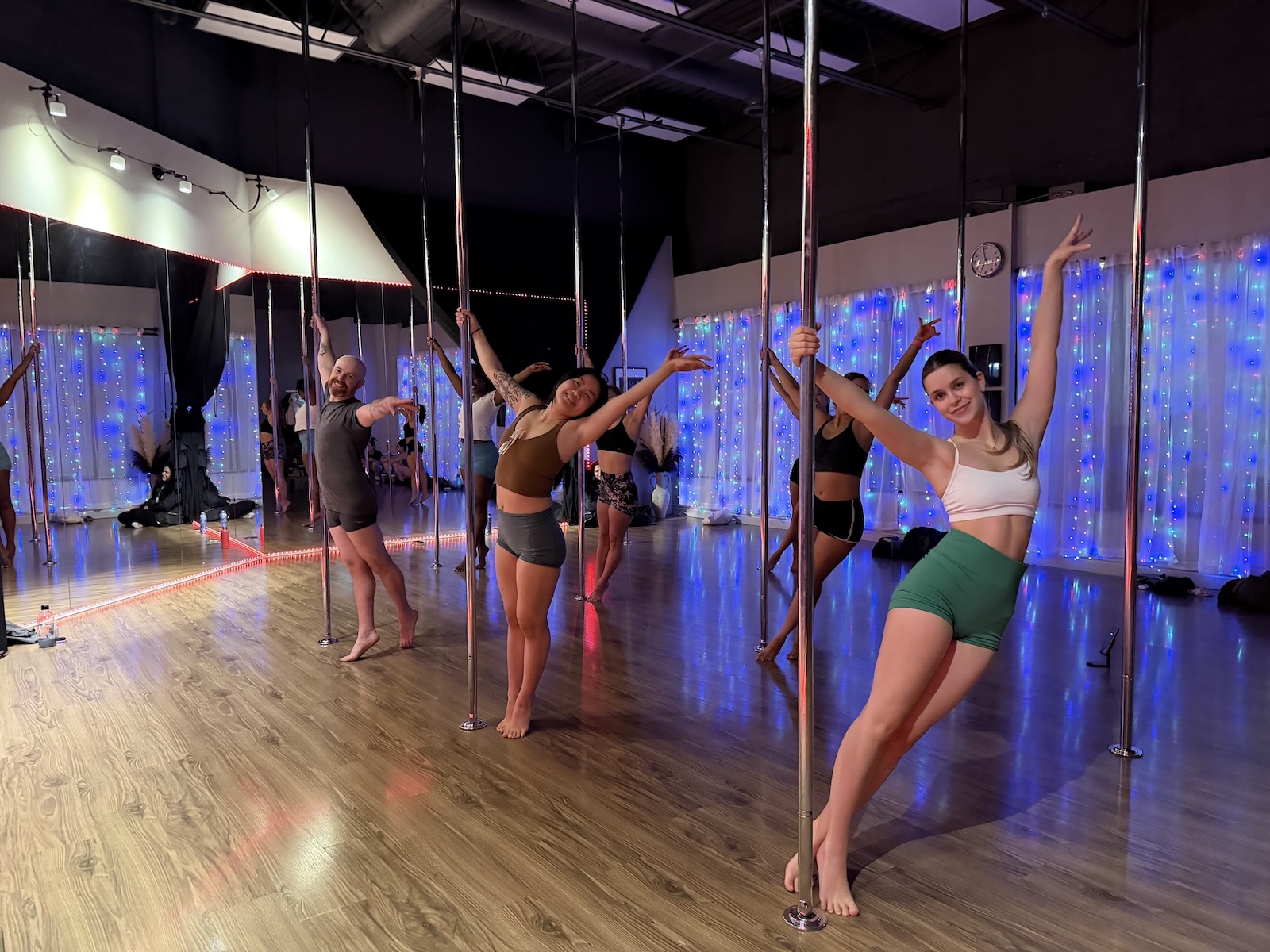
Your First Class (Minute by Minute)
This is how your first class usually goes:
- Before class: arrive 10 minutes early, settle in, ask questions, and meet your instructor.
- First 10 minutes of class: warm-up and simple mobility.
- Next 5-7 minutes: light muscle conditioning to prepare your body for pulling work.
- Main part of class: grips, beginner spins, introduction to climbing basics for future classes, and simple combinations.
- Last 5 minutes: cool down and stretch.
- After class: sign up for your next class or make a quick plan for your next class.
You are not expected to climb right away in your first class. Every student gets their own pole in class.
If You Are Worried, Read This First
Most beginners tell me they worry about one of these:
- “I will feel awkward.”
- “I am not flexible.”
- “I have no upper-body strength.”
- “I do not know what to wear.”
You are not alone in any of this. Most students start with the same worries, and many come alone. Class vibe is supportive and beginner-focused: music is on, the coach guides you step by step, and nobody expects a performance. If you are shy, tell your instructor at the beginning. We will meet you where you are.
Week 1: Build Your Routine, Not Pressure
Your only goal this week is to show up once and leave feeling safe.
- Nervous track: 1 beginner class.
- Ready track: 2 beginner classes.
- Extra work: optional 8-10 minutes of light mobility at home.
In class, you learn safe grip basics, simple footwork, beginner spins with support, and a few beginner strength moves to start building the strength you will need for future tricks. At home, keep mobility gentle for shoulders, wrists, hips, and back. You are not behind if this feels new. You are learning.
Week 2: Keep It Simple and Add Support
- Nervous track: 1 class + 1 short home session.
- Ready track: 2 classes + 1 short home session.
- Home session idea (8-20 minutes): squats to chair, wall push-ups, glute bridges, and light core work.
Even short sessions count. Small steps done regularly beat big efforts that burn you out.
Week 3: Keep Building Without Overdoing It
- Nervous track: 1-2 classes.
- Ready track: 2 classes (or 3 only if recovery is good).
- Extra work: 1 light strength or mobility session.
If grip feels tired or shoulders feel heavy, reduce volume for that week. Good progress is progress you can repeat.
Week 4: Consolidate and Plan Your Next Month
- Keep the same track that felt sustainable.
- Add only one variable: one extra class, or one longer home session, or one slightly harder movement.
- Reflect on wins: confidence, grip, stamina, and comfort in class.
When you start feeling more comfortable with the pole (often around week 3 or 4), you can add one dance-focused or flexibility-focused class. For example, try Exotic, Pole Art, or Stretching once a week. This way, your training supports not only strength, mobility, and pole skills, but also dance quality, expression, and flexibility.
Why We Prioritize Consistency First
Beginners usually improve faster with steady practice than with intense bursts. I usually say: the best student is the student who is consistent. In the first month, some tenderness and light bruising can happen and usually settles as your body adapts. That is one more reason to build gradually and stay consistent.
If numbers help you stay on track, a common benchmark is 150 minutes of moderate activity per week plus 2 strength days. Also, research suggests total weekly work matters more than how many days you split it into.
Start With One Easy Step
Book one intro-level class, or call/text us and we will help you choose your first class. You do not need a long commitment to begin. You can start with a single drop-in class and decide what feels right after your first visit. We also offer Intro classes (for new customers only) that are perfect for beginners (a 4-class format). If you are not sure about committing to four classes yet, start with one drop-in first.
If calling feels hard, use this opener: “Hi, I am brand new and a bit nervous. Which class should I start with?” Three useful questions to ask:
- Which beginner class is best for my first visit?
- What should I wear for my first class?
- How early should I arrive and what should I bring?
You do not need a perfect plan. You only need your first safe class.
You are welcome here.